
Powered By



Caring for a loved one with Alzheimer’s can bring challenges you may not have expected, like your family member seeing or hearing things that aren’t real, conversing with an empty chair, or accusing loved ones of stealing things. These symptoms can be signs of dementia-related psychosis. They can cause fear, agitation, and frustration — for both the person with Alzheimer’s and their caregivers.
Although Alzheimer’s has no cure, treatments can help manage symptoms of Alzheimer’s psychosis. This article covers medications, nondrug approaches, and ongoing research. Understanding these options can help caregivers make informed choices and provide better care.
Depending on the type of dementia and how far it has progressed, dementia-related psychosis can occur in about 20 percent to 70 percent of people with dementia. In Alzheimer’s disease, psychotic symptoms are most common in the late stages, but they can happen early on, too.
Sign up to view the results!
 Continue with Facebook
Continue with Email
Dementia-related psychotic symptoms include hallucinations (seeing or hearing things that aren’t real) and delusions (firmly held false beliefs). A person may think someone is stealing from them, believe they are in danger, or see people or objects that aren’t there.
These experiences can be frightening and confusing. Other behavioral symptoms that may occur with Alzheimer’s include aggression and agitation. Other symptoms may include:
People with Alzheimer’s may also experience “sundowning.” This is a period of confusion and agitation that happens in the late afternoon and evening. During this time, people may feel anxious or restless or have more trouble recognizing places and people.
While the exact cause of sundowning is unknown, it may be linked to changes in the brain and the body’s internal clock. Factors like fatigue, dim lighting, unfamiliar surroundings, and stress can make sundowning worse.
Alzheimer’s-related changes in the brain may contribute to hallucinations and delusions. The progressive deterioration of brain cells is a major cause of behavioral symptoms in Alzheimer’s, but hallucinations and delusions can also have other causes.
Other causes of hallucinations or delusions may include:
Delirium can also cause hallucinations or delusions. Delirium is a sudden change in a person’s mental state that can affect attention, awareness, and thinking. It’s more common in people with dementia.
Because these problems can cause or worsen hallucinations or delusions, new or worsening symptoms should be evaluated by a healthcare professional.
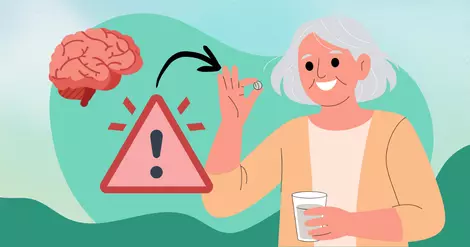
Nondrug approaches are usually tried first for hallucinations, delusions, and other behavioral symptoms of Alzheimer’s. Antipsychotic medications may be considered when these approaches haven’t helped and symptoms are severe, put the person or others in danger, or cause ongoing distress.
The agitation that may occur can be treated with two medications approved by the U.S. Food and Drug Administration (FDA): brexpiprazole (Rexulti) and dextromethorphan-bupropion (Auvelity).
When used for dementia-related psychosis, the benefits of antipsychotics are generally modest. These drugs are used off-label, meaning a drug is prescribed for a condition or purpose that the FDA hasn’t specifically approved.
Many antipsychotics used off-label for dementia-related psychosis are approved for other psychiatric conditions, such as schizophrenia.
Off-label antipsychotics for treating dementia-related psychosis include:
Antipsychotic drugs carry an FDA boxed warning that older adults with dementia-related psychosis who take these medications have an increased risk of death. A doctor should weigh the potential benefits and risks and closely monitor anyone taking an antipsychotic.
Antipsychotics can also increase the risk of stroke and cause side effects such as sedation, confusion, stiffness, and movement-related problems. Doctors may use low doses to help reduce side effects, but low doses don’t eliminate these risks. Treatment requires close monitoring and regular reassessment to make sure the potential benefits continue to outweigh the risks.
Clozapine requires additional monitoring because it can cause severe neutropenia, a serious drop in infection-fighting white blood cells called neutrophils. Regular absolute neutrophil count (ANC) blood tests are recommended during treatment.
Agitation can occur along with psychosis, but it isn’t the same as hallucinations or delusions. Two medications are FDA-approved for the treatment of agitation associated with dementia due to Alzheimer’s disease. To be clear, they’re not approved specifically to treat Alzheimer’s psychosis.
Brexpiprazole (Rexulti), an atypical antipsychotic, was approved for this use in 2023. Because Rexulti is an antipsychotic, it carries the boxed warning described above.
Also, dextromethorphan-bupropion (Auvelity), a nonantipsychotic medication, was approved for the same indication in 2026.
Hallucinations and delusions in Alzheimer’s can also be managed with nondrug approaches that focus on comfort, safety, reducing triggers, and improving quality of life. Caregivers may need to try different strategies to find what works best.
A change in behavior may be a clue that something in the person’s surroundings or routine is bothering them. Changes in caregivers or surroundings (such as moving to a nursing home or unfamiliar place), fatigue, and discomfort may contribute to behavioral symptoms.
Checking for pain, hunger, thirst, constipation, a full bladder, or signs of illness may help identify needs the person can’t easily communicate.
It can also help to notice when and where hallucinations or delusions occur. For example, do they tend to happen in a particular room, at a certain time of day, or after a change in routine? Keeping track of patterns in a simple log may help caregivers identify possible triggers and make changes.
Trying to convince someone that a hallucination or delusion isn’t real may increase frustration. Instead, avoid arguing about what the person sees, hears, or believes. Focus on the emotion behind the experience and offer reassurance if they seem frightened or upset.
Redirection may also help. You might suggest moving to another room, taking a walk, looking through photographs, or listening to familiar music. If the person says they see something that you don’t, you can acknowledge that they’re experiencing something without agreeing that it’s actually there. The goal is to help them feel safe rather than prove what’s real.
Small changes to the surroundings may make hallucinations or delusions less upsetting. Reducing noise, glare, and background distractions can help create a calmer setting. Good lighting may also reduce shadows or objects that could be misinterpreted.
Pay attention to what the person is seeing and hearing. A TV show or mirror reflection may seem real and cause distress. Turning off the TV, improving lighting, or covering mirrors may help. Familiar routines and calming activities can also make the person feel safer.
Researchers are studying new treatment options for Alzheimer’s psychosis. KarXT is being tested in a phase 3 trial in adults with Alzheimer’s disease and moderate to severe psychosis. It is approved for schizophrenia but not for Alzheimer’s psychosis.
Researchers are also studying noninvasive brain stimulation, such as repetitive transcranial magnetic stimulation (rTMS), for dementia-related symptoms. One published report involving a person with Alzheimer’s described improvement in some cognitive and behavioral symptoms, but rTMS is still experimental for Alzheimer’s psychosis.
People interested in clinical trials can ask their healthcare team whether a study may be appropriate for them.
Get updates directly to your inbox.




 Continue with Facebook
Continue with Email
Continue with Facebook
Continue with Email
Become a member to get even more





 Join


 Your Privacy Choices

This is a member-feature!
Sign up for free to view article comments.
No one would house my husband. Long story short his being moved to three different places with basically questionable approaches in two killed him in my opinion.
We'd love to hear from you! Please share your name and email to post and read comments.
You'll also get the latest articles directly to your inbox.